What Age Should My Child Start Karate?
One of the first questions parents ask is:
“What age is the right time for my child to start karate?”
The answer is not a single number.
It depends on the child — their maturity, attention span, and readiness to participate in a structured class.
However, there are some helpful guidelines.
The Typical Starting Age
Most traditional karate programs begin accepting students around 4 to 6 years old.
At this stage, many children are able to:
Follow simple instructions
Participate in group activities
Maintain focus for short periods of time
This makes it a practical starting point for structured training.
It’s Less About Age — More About Readiness
Two children of the same age can be very different in terms of readiness.
A child may be ready for karate if they can:
Listen to an instructor
Stay engaged for the duration of a class
Participate respectfully in a group setting
If these qualities are still developing, waiting a little longer can lead to a better experience.
Starting Younger Isn’t Always Better
Many parents feel pressure to start their child as early as possible.
In reality, starting at the right time is far more important than starting early.
A child who is ready will:
Enjoy the experience more
Build confidence more quickly
Develop stronger habits
Starting too early can lead to frustration for both the child and the instructor.
Benefits of Starting at the Right Time
When a child begins karate at an appropriate age and level of readiness, they gain:
Improved focus and listening skills
Better coordination and body awareness
Increased confidence
A sense of discipline and routine
These benefits develop gradually through consistent training.
What About Older Beginners?
It is never “too late” for a child to start karate.
Children who begin at 7, 8, or even older often progress quickly because they:
Understand instruction more easily
Have longer attention spans
Can apply feedback more effectively
Every starting point has its advantages.
Our Approach at Trinity Karate Dojo
At Trinity Karate Dojo, we evaluate readiness based on the individual child — not just their age.
We focus on:
Providing clear, structured instruction
Creating a respectful training environment
Helping each child progress at an appropriate pace
Our goal is to ensure that each student begins at a point where they can succeed and grow.
A Simple Way to Know
If you are unsure whether your child is ready, the best next step is simple:
Observe a class or have your child participate in one.
This provides a clear sense of how they respond to the environment, structure, and instruction.
A Simple Invitation
We invite you to visit Trinity Karate Dojo and see a class in person.
This will help you determine if the timing is right and give your child a chance to experience training firsthand.
— Trinity Karate Dojo
How Many Times Per Week Should You Train in Karate?
One of the most common questions new students and parents ask is:
“How often should I (or my child) train each week?”
The answer depends on goals, schedule, and experience — but there are some clear guidelines that can help.
Consistency Matters More Than Intensity
In karate, progress is built through consistent practice over time.
Training once in a while, even with high effort, is far less effective than showing up regularly.
It is not about doing the most in a single week.
It is about building a steady rhythm.
A Practical Starting Point
For most beginners, 2 classes per week is an ideal starting point.
This allows students to:
Retain what they are learning
Build familiarity with techniques
Develop a routine without feeling overwhelmed
Two days per week provides enough repetition to make steady progress while remaining manageable for most schedules.
Progressing to 3 Classes Per Week
As students become more comfortable, many choose to train 3 times per week.
At this level, you will often notice:
Faster improvement in technique
Better physical conditioning
Increased confidence in class
The additional day helps reinforce learning and deepen understanding.
Is More Always Better?
Training more frequently can be beneficial, but only when it is sustainable.
Attending 3-4 classes per week may accelerate progress, but it also requires:
Time
Recovery
Consistent commitment
For most students, especially beginners, more is not always necessary.
The goal is to find a pace that can be maintained over months and years.
For Children: Balance Is Important
Children benefit from regular training, but balance is key.
2 classes per week allows them to:
Stay engaged without burnout
Balance school and other activities
Build discipline through routine
Consistency over time has a far greater impact than short bursts of high activity.
For Adults: Fit Training Into Your Life
Adults often have more demanding schedules.
The best training plan is one that fits realistically into your week.
Even 2 consistent classes per week can lead to meaningful progress over time.
Trying to do too much too quickly can lead to inconsistency — which slows progress more than anything else.
Quality Over Quantity
The focus of each class matters more than the number of classes.
A well-structured training session with attention to detail will always provide more value than simply increasing frequency without focus.
Our Approach at Trinity Karate Dojo
At Trinity Karate Dojo, we encourage students to train consistently at a pace that fits their lifestyle.
For most students, this means:
Starting with 2 classes per week
Increasing to 3 as they become more comfortable
Our goal is to support long-term development — not short-term intensity.
A Simple Guideline
If you are unsure where to begin, a good rule of thumb is:
Start with 2 classes per week, and build from there.
Consistency will always produce better results than occasional effort.
A Simple Invitation
If you are considering training, we invite you to observe or participate in a class at Trinity Karate Dojo.
This will give you a clear sense of how training fits into your schedule and what a consistent routine looks like.
— Trinity Karate Dojo
Why Karate Was Never Meant to Be “Easy” — And Why That’s a Good Thing
In a world where many activities are designed to be quick, convenient, and immediately rewarding, karate can feel different.
Progress takes time. Techniques require repetition. Improvement is gradual.
For some, this can seem discouraging at first.
But this is not a flaw in training — it is the point of it.
The Value of Difficulty
Traditional karate was never designed to provide instant results.
It was designed to develop:
Discipline
Patience
Attention to detail
These qualities cannot be rushed.
They are built through consistent effort over time.
Why “Easy” Often Falls Short
Programs that prioritize constant entertainment or rapid advancement can feel appealing in the short term.
However, when progress is made too easy:
Standards are lowered
Skills become shallow
Confidence is not fully earned
True confidence comes from overcoming challenges — not avoiding them.
The Role of Repetition
One of the most important aspects of karate training is repetition.
Practicing the same movement many times may seem simple on the surface.
In reality, each repetition builds:
Precision
Muscle memory
Awareness of detail
Over time, small improvements compound into meaningful progress.
Growth Happens Outside the Comfort Zone
Karate regularly places students just beyond their current level of comfort.
This might look like:
Learning a new technique
Practicing in front of others
Receiving correction from an instructor
These moments can feel challenging.
They are also where the most growth occurs.
For Children: Learning to Stick With Something
Children today are often exposed to activities that offer quick rewards.
Karate provides something different.
It teaches them:
To work toward long-term goals
To stay committed even when something is difficult
To take pride in gradual improvement
These lessons extend far beyond the training floor.
For Adults: A Different Kind of Progress
Adults often come to karate looking for fitness or stress relief.
What they find is something deeper.
Training becomes a process of steady, personal development — one that challenges both body and mind.
The difficulty is not a barrier.
It is what makes the experience meaningful.
Standards Matter
In a traditional dojo, progress is earned.
Rank is not given based on time alone, but on demonstrated ability, effort, and understanding.
This maintains the integrity of training and ensures that each step forward represents real growth.
Our Approach at Trinity Karate Dojo
At Trinity Karate Dojo, we maintain a structured and disciplined approach to training.
We believe:
Progress should be earned
Instruction should be clear and consistent
Students should be challenged in a supportive environment
We do not aim to make training easy.
We aim to make it meaningful.
A Different Perspective
If you are considering karate, it may help to view difficulty differently.
Rather than something to avoid, it can be seen as a necessary part of growth.
The skills developed through steady effort — discipline, focus, resilience — are the same qualities that benefit students in all areas of life.
A Simple Invitation
If you are looking for something that goes beyond quick results, we invite you to observe a class at Trinity Karate Dojo.
Seeing the training firsthand provides a clear understanding of the structure, standards, and long-term approach.
— Trinity Karate Dojo
How Karate Helps Kids Handle Bullying (Without Encouraging Fighting)
Bullying is one of the most common concerns parents have when considering activities for their children.
They want their child to be confident. They want them to be safe. And they want them to know how to respond if they are ever in a difficult situation.
Karate can help — but not in the way many people assume.
Karate Does Not Teach Children to Fight
A common misconception is that martial arts training encourages aggression.
In a traditional karate environment, the opposite is true.
Children are taught:
Control over their actions and emotions
Respect for others
When not to use physical force
The goal is not to create fighters.
The goal is to develop individuals who can carry themselves with confidence, awareness, and restraint.
Confidence Changes How Children Are Perceived
One of the most important ways karate helps with bullying is not physical — it is behavioral.
As children train, they begin to:
Stand more upright
Make better eye contact
Speak more clearly
Carry themselves with quiet confidence
This kind of presence often changes how others perceive them.
Children who appear confident and self-aware are less likely to be targeted.
Teaching Awareness and Boundaries
Karate training develops awareness.
Children learn to:
Pay attention to their surroundings
Recognize situations early
Stay calm under pressure
They are also taught appropriate ways to set boundaries, including:
Using their voice
Seeking help from adults
Removing themselves from unsafe situations
These skills are often more effective than physical responses.
Emotional Control Under Pressure
One of the most valuable skills karate develops is self-control.
In class, students are regularly placed in situations where they must:
Listen carefully
Respond to correction
Manage frustration
Over time, this builds the ability to stay composed — even when emotions are high.
In a bullying situation, this can make a significant difference.
A child who can remain calm is better equipped to make good decisions.
Physical Skills as a Last Resort
While the primary focus is awareness and avoidance, karate does teach physical skills.
However, these are presented responsibly.
Students learn that physical techniques are:
A last resort
To be used only when necessary for safety
To be applied with control, not anger
This perspective is essential.
Skill without judgment can lead to poor choices. Karate training emphasizes both.
The Role of the Training Environment
Not all programs approach this topic the same way.
A quality dojo reinforces:
Respect between students
Controlled, supervised partner training
Clear expectations for behavior
Children experience a structured environment where they are held accountable — and supported.
Our Approach at Trinity Karate Dojo
At Trinity Karate Dojo, we take a balanced and responsible approach to this topic.
We focus on:
Building confidence through consistent training
Teaching awareness and self-control
Reinforcing respect and discipline in every class
We do not teach children to seek out conflict.
We help them become individuals who are better prepared to handle it if it arises.
A Thought for Parents
Karate is not a quick solution to bullying.
It is a process that develops a child over time.
The goal is not just to change how a child responds to difficult situations — but to change how they carry themselves every day.
A Simple Invitation
If this is something you are considering for your child, we invite you to observe a class at Trinity Karate Dojo.
Seeing the structure, interaction, and instruction firsthand is the best way to understand how training supports a child’s development.
— Trinity Karate Dojo
Do I Need to Be in Shape to Start Karate?
This is one of the most common concerns people have before starting karate.
Many assume they need to be stronger, more flexible, or in better condition before stepping onto the training floor.
The reality is much simpler:
You do not need to be in shape to begin karate.
Karate Builds Fitness — It Doesn’t Require It
Karate is not something you prepare for. It is something that prepares you.
Training is designed to develop:
Strength
Coordination
Balance
Flexibility
These qualities improve gradually through consistent practice.
You begin at your current level, and over time, your body adapts.
Starting Where You Are
Every student begins with a different background.
Some have athletic experience. Others have none.
In a well-structured dojo:
Beginners are not expected to keep up with advanced students
Movements are taught step by step
Progress is measured individually
There is no advantage in waiting to “get in shape” first. The process itself creates that change.
A Sustainable Approach to Training
Unlike high-intensity fitness programs that can feel overwhelming, classical karate emphasizes control and progression.
Training focuses on:
Proper technique
Efficient movement
Gradual conditioning
This makes it sustainable over time — especially for adults balancing work, family, and other responsibilities.
For Children: Building Healthy Habits Early
Children do not need to be athletic to begin karate.
Training helps them develop:
Coordination and body awareness
Focus and attention
Confidence in movement
More importantly, it builds the habit of consistent effort, which is far more valuable than natural ability.
For Adults: Removing the Barrier to Start
Many adults delay starting because they feel out of shape.
This often becomes a cycle — waiting for the “right time” that never quite arrives.
Karate breaks that cycle.
You begin with simple movements, build gradually, and develop both physical and mental strength along the way.
What Matters Most
In karate, progress is not determined by your starting point.
It is determined by:
Consistency
Effort
Willingness to learn
These qualities matter far more than fitness level.
Our Approach at Trinity Karate Dojo
At Trinity Karate Dojo, we welcome beginners at all levels.
Our training environment emphasizes:
Clear instruction
Gradual progression
Respect for each student’s starting point
Whether you are a child or an adult, you will be guided through the process step by step.
A Simple Next Step
If you’ve been waiting to feel “ready,” it may be helpful to reconsider.
Karate is not something you prepare for — it’s something you begin.
We invite you to observe or participate in a class at Trinity Karate Dojo and experience the process for yourself.
— Trinity Karate Dojo
What Should I Expect in My First Karate Class?
Starting something new can feel uncertain — especially when it’s something unfamiliar like karate.
Many children and adults wonder what their first class will actually be like.
Will it be intense? Confusing? Intimidating?
In a well-structured dojo, your first class is designed to be clear, welcoming, and purposeful.
A Calm and Respectful Environment
When you enter a traditional karate dojo, one of the first things you’ll notice is the atmosphere.
Classes are structured and focused, but not chaotic or overwhelming.
Students line up, instructors guide the class, and there is a clear sense of respect in how everyone interacts.
You are not expected to know everything — you are simply expected to pay attention and do your best.
A Simple Introduction to Basics
Your first class will focus on fundamentals.
You may be introduced to:
Basic stances
Simple punches or blocks
How to stand, move, and follow instruction
These are the building blocks of karate.
There is no pressure to perform perfectly. The goal is to begin understanding how training works.
Step-by-Step Instruction
A quality class does not rush beginners.
Instructors will:
Demonstrate each movement
Break it down into manageable steps
Offer corrections in a clear and respectful way
You will likely repeat simple movements several times — this is intentional.
Repetition builds familiarity and confidence.
Learning Through Structure
Karate classes follow a consistent format.
While each school may vary slightly, a typical class may include:
A formal beginning (lining up, bowing in)
Warm-up or preparation
Basics and drills for ether sparring or kata work
Partner and application work
cool down (or fun activity for kids)
A formal closing
This structure helps students stay focused and understand what to expect over time.
A Focus on Effort, Not Perfection
In your first class, no one expects you to be skilled.
What matters most is:
Your willingness to try
Your ability to listen
Your effort during training
Everyone starts as a beginner.
Progress comes from showing up consistently and improving step by step.
For Parents: What You’ll Notice
If you are observing your child’s first class, you may notice:
Clear instruction and organization
Students being guided and corrected respectfully
A balance of discipline and encouragement
These are signs of a healthy training environment.
What You Won’t See
In a classical karate class, you typically won’t see:
Chaotic or unstructured activity
Pressure to keep up with advanced students
An emphasis on entertainment over learning
Training is purposeful, even at the beginner level.
Our Approach at Trinity Karate Dojo
At Trinity Karate Dojo, we are intentional about making the first class a positive and grounded experience.
We focus on:
Clear guidance for beginners
A respectful and structured environment
Building confidence through small, steady progress
Whether you are a child or an adult, your first class is simply the beginning of the process.
A Simple Next Step
If you’ve been considering karate, the best way to understand it is to experience it firsthand.
We invite you to observe or participate in a class at Trinity Karate Dojo.
There is no expectation to be perfect — only to begin.
— Trinity Karate Dojo
Is It Too Late to Start Karate as an Adult?
Many adults are interested in karate — but hesitate to take the first step.
They wonder:
Am I too old to start?
Am I in good enough shape?
Will I be the only beginner?
These concerns are normal.
The good news is this:
It is not too late to start karate — especially when it is taught the right way.
Karate Was Never Meant Only for Children
Historically, karate was practiced by adults as a lifelong discipline.
It was developed not as a sport or fitness trend, but as a system of personal development, self-defense, and character training.
In classical karate, progress is not based on age — it is based on consistency and effort.
You Don’t Need to Be “In Shape” to Begin
One of the biggest misconceptions about karate is that you must already be fit to start.
In reality:
Training builds strength gradually
Flexibility improves over time
Conditioning develops naturally through practice
Karate meets you where you are.
The goal is not to compare yourself to others, but to improve steadily from your own starting point.
Training at a Pace That Makes Sense
In a classical karate dojo, adults are not rushed or pushed beyond what is appropriate.
Training emphasizes:
Proper technique
Balance and control
Safe, progressive movement
As you train, your body adapts.
Karate becomes a practice you can sustain — not something that breaks you down.
More Than a Workout
Many adults try karate expecting a fitness class.
What they often find is something deeper.
Karate provides:
Mental focus and stress relief
A structured break from daily distractions
A sense of purpose and progress
The discipline of training becomes a way to reset — physically and mentally.
The Long-Term Value of Adult Training
Unlike many fitness programs, karate is not seasonal.
It evolves as you do.
As adults continue training, they often notice:
Improved posture and balance
Increased confidence and calmness
Greater patience and self-discipline
Karate becomes part of how you live, not just something you do.
Our Approach at Trinity Karate Dojo
At Trinity Karate Dojo, adult beginners are welcomed and supported.
Our training environment emphasizes:
Respect and encouragement
Strong fundamentals
Individual progress over comparison
Whether you are returning to martial arts or starting for the first time, you will train in a setting designed for long-term growth.
A Better Question Than “Am I Too Late?”
Instead of asking whether it’s too late to start, consider this:
What would consistent, disciplined training add to my life?
Karate offers a path — one that begins exactly where you are.
A Simple Invitation
If you’ve been curious about karate but unsure where to begin, we invite you to observe a class at Trinity Karate Dojo.
There is no pressure to rush.
The first step is simply showing up.
— Trinity Karate Dojo
Is Karate Good for Kids? Discipline, Confidence, and Character Explained
Many parents look into karate because they want more for their children.
More focus. More confidence. More discipline.
But an important question comes first:
Is karate actually good for kids — and if so, why?
When taught correctly, karate can be one of the most beneficial activities a child participates in.
Karate Is More Than Physical Activity
While karate certainly helps children become stronger, more coordinated, and more active, its greatest benefits go far beyond fitness.
Classical karate is designed to teach:
Self-control
Focus and attention
Respect for others
Perseverance through difficulty
Unlike many activities that prioritize entertainment, karate asks children to engage their mind as much as their body.
Discipline Without Harshness
Discipline is often misunderstood.
In a quality karate program, discipline is not about fear or punishment — it’s about learning how to manage oneself.
Children learn:
How to line up, listen, and respond
How to follow instructions the first time
How to stay engaged even when something is challenging
Over time, these habits carry into school, home, and other activities.
Confidence Built the Right Way
True confidence does not come from constant praise.
It comes from overcoming challenges.
In karate, children face:
New techniques that take time to learn
Corrections from instructors
Moments of frustration and progress
As children work through these moments, they develop confidence rooted in effort and improvement — not comparison.
This kind of confidence is steady and lasting.
Teaching Respect and Self-Control
Respect is built into traditional karate training.
Children are taught:
To bow as a sign of focus and respect
To listen attentively to instructors
To treat training partners with care
Just as importantly, karate teaches self-control.
Children learn that strength is not about aggression — it’s about control, restraint, and responsibility.
Helping Kids Handle Challenges and Bullying
Parents often ask whether karate helps with bullying.
Karate does not teach children to look for fights.
Instead, it teaches:
Awareness and confidence in posture and presence
Verbal boundaries and self-control
How to stay calm under pressure
When children carry themselves with confidence and discipline, they are often less likely to be targeted in the first place.
Why the Environment Matters
Not all karate programs offer the same experience.
The benefits children gain depend heavily on the environment and instruction.
A quality dojo provides:
Clear expectations and structure
Instructors who model calm authority
A respectful, focused training atmosphere
Without these elements, karate becomes just another activity.
Our Approach at Trinity Karate Dojo
At Trinity Karate Dojo, we teach classical karate with children’s development in mind.
Our focus includes:
Structure and consistency
Skill built through fundamentals and practice
Character development alongside technique
We believe karate should help children grow into disciplined, confident, and respectful young people.
A Thought for Parents
Karate is not about making children perfect.
It’s about giving them tools — tools to handle challenges, frustration, and growth.
When taught well, karate becomes a steady influence in a child’s life.
A Simple Invitation
If you’re considering karate for your child, we invite you to observe a class at Trinity Karate Dojo.
Seeing the environment, structure, and instruction firsthand is the best way to decide if it’s the right fit.
— Trinity Karate Dojo
How Long Does It Take to Earn a Black Belt in Karate?
This is one of the most common questions parents and adult students ask.
It’s also one of the most misunderstood.
The honest answer is this:
Earning a black belt is not about time alone — it’s about growth, consistency, and maturity.
Understanding what a black belt really represents will help set the right expectations from the beginning.
What a Black Belt Is (and Is Not)
A black belt is not a reward for showing up.
It is not a participation trophy. And it is not the end of training.
In classical karate, a black belt represents:
A strong foundation in fundamentals
Consistent, disciplined practice over time
Personal growth in focus, self-control, and perseverance
Traditionally, a black belt marks the beginning of deeper study, not mastery.
The Realistic Timeframe
In a traditional karate school, earning a black belt typically takes:
Several years of consistent training
There is no fixed shortcut.
Progress depends on:
How often a student trains
Their effort and focus during class
Their ability to apply corrections
Emotional and physical maturity
Children and adults progress differently, and that is intentional.
Why Faster Isn’t Better
Some programs advertise guaranteed black belts in a set number of months or years.
While this may sound appealing, it often comes at a cost.
When rank is rushed:
Fundamentals are skipped
Skills are shallow
Belts lose meaning
More importantly, students miss out on the lessons that come from working through difficulty.
In classical karate, struggle is not a failure — it’s part of the process.
What Children Learn Along the Way
For children, the journey toward black belt is often more valuable than the belt itself.
Along the way, they learn:
Patience and delayed gratification
How to handle correction
How to stay committed when progress feels slow
Confidence built on effort, not praise
These lessons shape character in ways that last well beyond childhood.
What Adults Gain From the Process
Adults often come to karate with a different mindset.
They are not chasing a belt — they are seeking:
Purposeful training
Mental focus
A practice that grows with them
For adults, the black belt journey becomes a marker of consistency and personal discipline over time.
There is no pressure to rush.
Our Approach at Trinity Karate Dojo
At Trinity Karate Dojo, we believe rank should reflect real skill and real growth.
That means:
Students progress when they are ready
Fundamentals are emphasized at every level
Character and maturity matter alongside technique
We do not promise quick results.
We promise meaningful training.
A Better Question to Ask
Instead of asking, “How long will it take?”
A better question is:
“What kind of person will this training help me or my child become?”
When the focus is on growth, the belt becomes a symbol — not the goal.
A Simple Invitation
If you’re exploring karate and want a clear, honest approach to training and rank, we invite you to visit Trinity Karate Dojo and observe a class.
The path takes time — and it’s worth it.
— Trinity Karate Dojo
What Parents Should Look for When Choosing a Karate School
Choosing a karate school for your child is an important decision.
At first glance, many schools can look similar — uniforms, belts, enthusiastic instructors, and promises of confidence and discipline.
But not all karate schools are built on the same foundation.
Knowing what to look for can help you choose a school that truly supports your child’s long-term growth.
1. Clear Structure and Expectations
Children thrive when expectations are clear and consistent.
A quality karate school should have:
A structured class format
Clear rules for behavior and etiquette
Consistent standards for progress
Structure teaches children how to listen, follow instruction, and take responsibility for their actions.
If a class feels chaotic or unstructured, that environment often carries over into a child’s mindset.
2. An Emphasis on Character, Not Just Technique
Karate is about more than punches and kicks.
A strong school intentionally develops:
Respect
Self-control
Perseverance
Humility
Ask yourself:
Do instructors correct behavior, not just technique?
Are students taught how to carry themselves with respect?
Technique without character is incomplete training.
3. Progress That Is Earned, Not Given
Belts are meaningful only when they represent real growth.
Be cautious of programs that:
Guarantee black belts by a certain age or timeframe
Test frequently without clear skill expectations
Emphasize speed over understanding
In a quality dojo, advancement is earned through:
Consistent attendance
Demonstrated skill
Maturity and effort
This teaches children that progress comes from work — a lesson that extends far beyond karate.
4. Qualified, Engaged Instructors
Instructors play a major role in your child’s experience.
Look for instructors who:
Are actively engaged during class
Correct students with patience and clarity
Model respect and self-discipline
A good instructor builds students up without lowering standards.
5. A Training Environment You Trust
Pay attention to the atmosphere of the dojo.
Ask yourself:
Do students treat each other respectfully?
Is the environment calm, focused, and purposeful?
Would you feel comfortable with your child training here long-term?
A dojo should feel like a place of growth, not chaos or pressure.
Why These Standards Matter
Karate is not a short-term activity.
When taught well, it shapes how children approach challenges, authority, and effort for years to come.
Choosing the right school isn’t about finding the most convenient option — it’s about choosing a place that aligns with the values you want reinforced in your child’s life.
Our Approach at Trinity Karate Dojo
At Trinity Karate Dojo, we teach classical karate with a focus on:
Structure and discipline
Skill built through consistent practice
Character development alongside physical training
We believe karate should strengthen children from the inside out.
This approach isn’t for everyone — but for families seeking depth, clarity, and long-term growth, it makes all the difference.
A Simple Next Step
If you’re exploring karate schools, we encourage you to observe classes, ask thoughtful questions, and trust what you see.
If you’d like to experience our approach firsthand, you’re welcome to visit Trinity Karate Dojo and observe a class.
— Trinity Karate Dojo
What Is Classical Karate? (And Why It Matters for You or Your Child)
Today, the word karate is used to describe many different things.
Fitness programs. Sport competitions. Self-defense classes. After-school activities.
But classical karate is something deeper — and very different.
Understanding this difference is one of the most important steps in choosing the right karate school.
What Classical Karate Is
Classical karate is a traditional martial art, passed down through generations, with a clear purpose:
To develop the whole person — body, mind, and character — through disciplined training.
In a classical karate dojo, training is structured, intentional, and progressive. Students learn:
Fundamentals (kihon): Proper stances, strikes, blocks, and movement
Kata: Formal patterns that teach balance, coordination, timing, and strategy
Partner training: Controlled application of techniques with others
Each part supports the others. Nothing is rushed. Nothing is random.
What Classical Karate Is Not
Classical karate is not built around entertainment or instant gratification.
It is not:
A fast-track black belt program
A high-energy workout disguised as martial arts
A sport-first system focused on medals and trophies
While fitness, fun, and confidence naturally develop through training, they are results, not the goal.
The goal is mastery — and mastery takes time.
Why This Matters for Children
Children thrive in environments with clear expectations, structure, and accountability.
Classical karate provides exactly that.
Through consistent training, children learn:
How to listen and follow instruction
How to work through frustration
How to show respect to instructors and peers
How to earn progress through effort, not shortcuts
These lessons extend far beyond the dojo.
Parents often tell us they notice improvements in focus, confidence, and behavior — not because karate is easy, but because it is meaningful.
Why This Matters for Adults
Many adults come to karate looking for more than a workout.
They want:
Purposeful movement
Mental focus and stress relief
A practice they can grow in for years
Classical karate offers a lifelong path.
Training adapts as you age. The depth increases. The practice becomes more refined, not more extreme.
For adults, karate is not about proving something — it’s about becoming something.
Why Trinity Karate Dojo Teaches Classical Karate
At Trinity Karate Dojo, we have chosen to preserve and teach classical karate intentionally.
That means:
Quality over speed
Skill over shortcuts
Character over flash
We believe martial arts should shape how you live, not just how you move.
This approach is not for everyone — and that’s by design.
It is for families and individuals who value depth, discipline, and long-term growth.
A Simple Invitation
If you’re exploring karate for yourself or your child, we encourage you to look beyond advertisements and promises.
Observe a class. Ask questions. Pay attention to the atmosphere.
Classical karate is something you experience, not something you rush.
If this approach resonates with you, we invite you to visit Trinity Karate Dojo and see traditional karate in practice.
— Trinity Karate Dojo
A New Year, a Better Path: Why Karate Is More Than a Resolution
The start of a new year brings reflection.
Families think about growth. Parents think about their children’s confidence, discipline, and focus. Adults think about health, purpose, and consistency.
Many people make resolutions.
At Trinity Karate Dojo, we believe in something deeper than resolutions — we believe in a path.
Resolutions Fade. Training Builds.
A resolution is often built on motivation. Motivation comes and goes.
Karate is different.
Classical karate is built on practice, structure, and commitment. You don’t rely on how you feel that day — you show up, bow in, and train. Over time, something powerful happens:
Confidence replaces hesitation
Discipline replaces excuses
Character replaces quick fixes
This is why karate has endured for generations.
Why the New Year Is a Natural Time to Begin
The beginning of the year is not about becoming someone new overnight.
It’s about choosing a better direction.
For children, karate provides:
Clear structure and expectations
Respect for instructors, parents, and peers
Physical activity paired with mental focus
For adults, karate offers:
Sustainable movement and strength
Stress relief through disciplined practice
A lifelong skill — not a temporary workout
Karate is not seasonal. It’s foundational.
What Makes Trinity Karate Dojo Different
Trinity Karate Dojo is a classical karate school.
That means:
We value quality over speed
We emphasize fundamentals, kata, and partner training
We develop people, not just techniques
We are not a fast-track, entertainment-based program. We are a dojo rooted in tradition, discipline, and long-term growth.
This approach is especially important in a world that constantly pushes shortcuts.
A Simple Invitation for the New Year
If this new year has you thinking about growth — for yourself or your child — we invite you to experience karate the way it was meant to be taught.
Come observe a class. See the structure. Feel the atmosphere. Ask questions.
Whether you begin now or later, the path is always open.
A new year is a moment. Karate is a lifetime.
— Trinity Karate Dojo
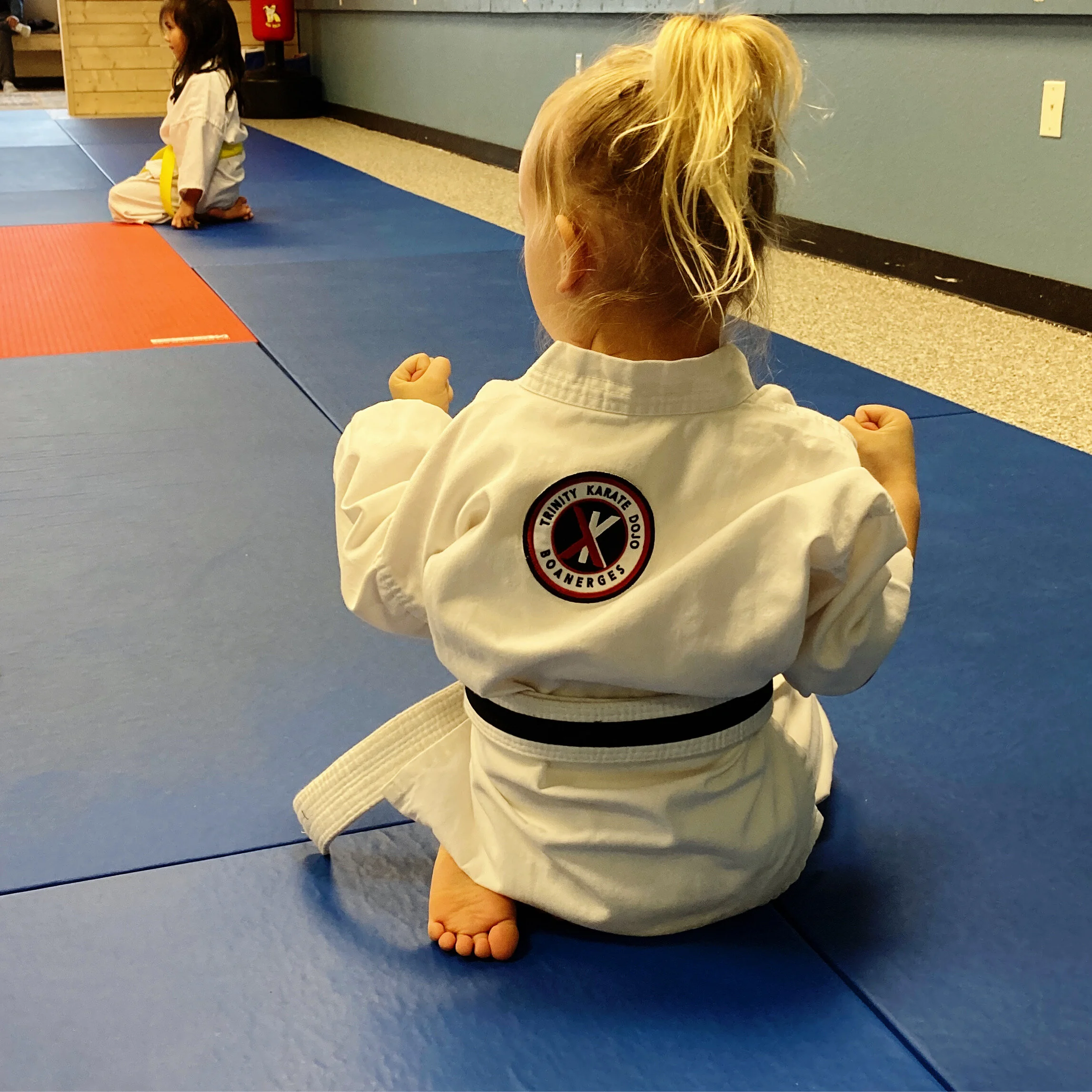
The Details Count
Why you shouldn’t let you child quit martial arts
John Wooden often quoted to his players,
“It's the little details that are vital. Little things make big things happen."
Punch, block, kick, strike, kata over and over. Master the basics and keep it simple.
Kobe Bryant
“Why do you think I’m the best in the world? I don’t get bored with the basics.”
Don’t Quit
Why you shouldn’t let you child quit martial arts
The work week is just beginning and you know you really should get an exercise time in. Hit the gym, or workout from home. Some days you are jumping in and ready to “feel the burn!” Then there are the other times that you literally have to drag yourself to make it happen. Don’t even feel like starting much less going all the way through. But at the end of it, aren’t you glad you did it? Felt so good!
Why is that? We as adults can understand the benefits to pushing ourselves through something we might not even feel like doing somedays, because we know the end goal. The reward at the end of the workout was enough to power us into starting the workout.
However, children are different. They live in the moment and don’t want to stop watching their shows, playing their video games or playing with friends to do something that is going to benefit them. They may have signed up for Karate because it was fun, and they have fun once they are in class, but sooner or later, they are going to need YOU to be the right parent for them and get them to class.
Even incredibly fun things lose their charm. Imagine I took you on the same rollercoaster two times per week. After a while, it would be tedious, and I’d get tired of taking you. The major difference is that rollercoasters are strictly for amusement, Karate is an important part of building character, focus, and confidence to be successful adults.
So go back to your goals. Why did you sign up for Karate? Or enroll your child? Maybe to improve focus or to raise confidence. Maybe improve their self-discipline, build character or get in better physical condition. Plus, they are gaining the ability to defend themselves in the event of a life-or-death altercation.
This is not an activity people do to be amused for a season, like soccer, baseball, or basketball. This is an endeavor that can save your life, like learning to swim. It provides character development to equip them for life’s challenges.
So, the solution…
1. Get them to class, recommit to the benefits you want from the training and recommit to your kids. They need YOU. No one climbs Mount Everest alone, it takes a team of people, doctors, dieticians, Sherpas, and guides, not to mention the encouragement of family. Earning a Black Belt is the same.
2. Make sure your child is doing something not-so-fun before class. No one wants to get off the couch, or put up the video games, even adults. If you say, “After you finish the vacuuming, we are going to martial arts,” you are going to get a much more agreeable participant.
3. Let us know you had some issues getting them there. We would love to help you out! We are here for you and your child.
It maybe hard for you as the parent now. But look forward to what happens when they do achieve their black belt and develop the character they need in life.
“Thank you Mom and Dad for not letting me quit.”